Effects
“There is a ‘Middle Ground’ for better protecting our children's health. We need not be blind to the dangers of the vaccine in order to be concerned about the dangers of the disease. We need not ignore concerns about whooping cough in order to avoid vaccine-related brain damage.”
—Jeffrey Schwartz, an environmental lawyer and President of Dissatisfied Parents Together
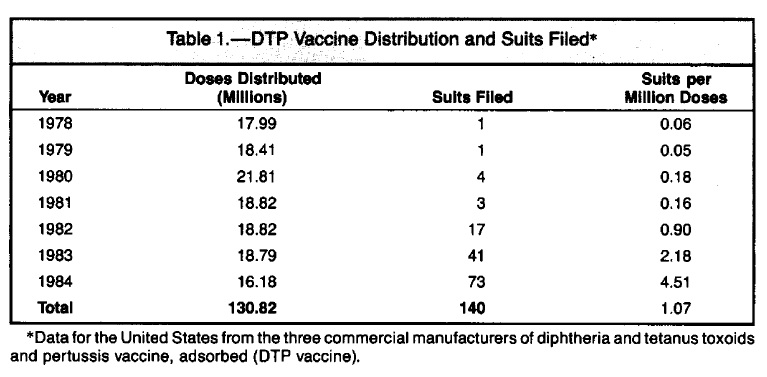
DPT, the movement, unleashed a deluge of lawsuits. Pharmaceutical companies abandoned the production of vaccines out of fear of legal repercussions. In 1986, the last remaining company threatened to quit. The government had a major crisis on its hands.
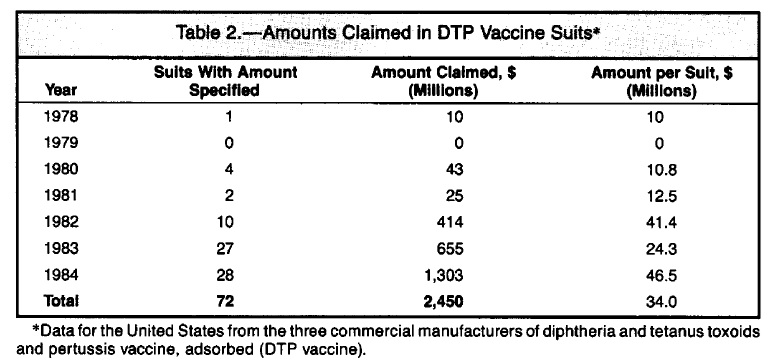
Dr. Alan Hinman, "DTP Vaccine Litigation," 1986, American Journal of Diseases of Children.
On the last day of the Ninety-Ninth Congress, the “National Childhood Vaccine Injury Act” was passed to protect vaccine makers, and President Reagan signed it into law. The act included the Vaccine Injury Compensation Program, streamlining the compensation process for injured children and capping the settlement to $250,000.
“The moral justification for compensation…is based on the social contract. National immunization programmes not only aim to protect the individual but also to protect society. … If individuals are asked to accept a risk (even a very small one) partly for the benefit of society then it seems equitable that society should compensate the victims of occasional unlucky mishaps.”
— Rosemary Fox, an advocate and founder of the Association of Parents of Vaccine Damaged Children, a British movement analogous to the U.S.’s DPT movement
Most importantly, it protected pharmaceutical companies from litigation and encouraged vaccine producers to continue researching and developing vaccines. It also included provisions that monitored licensed vaccines, mandated reporting adverse reactions, demanded for a safer vaccine, and established a federal record-keeping agency regarding vaccines. This marked the first time the American public had been involved in making vaccine policy.
"Childhood Immunizations - Barbara Loe Fisher," 28 October 2014, interview, Mississippi Public Broadcast.
However, the movement diverged from vaccine safety concerns. In 1985, Fisher co-authored the provocative book, DPT: A Shot in the Dark. The parade of heart-rending anecdotes exacerbated tensions between parents and health officials.
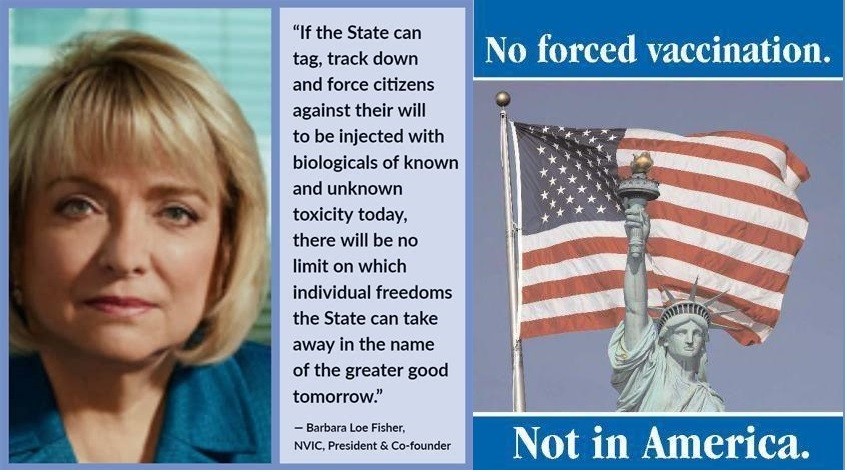
"Barbara Loe Fisher: No Forced Vaccination," n.d., Health Impact News.
Fisher challenged the validity of vaccine mandates. In 1989, she renamed the organization to the National Vaccine Information Center, which promulgated absolute parental freedom of choice.
“Barbara [Loe Fisher] came basically from a kind of conservative libertarian background. I was sort of a liberal statist... Barbara tended to look at it like...'Who's responsible for the health of my child—me and my husband, or the government?'”
— Jeffrey Schwartz, the third leader of the DPT organization
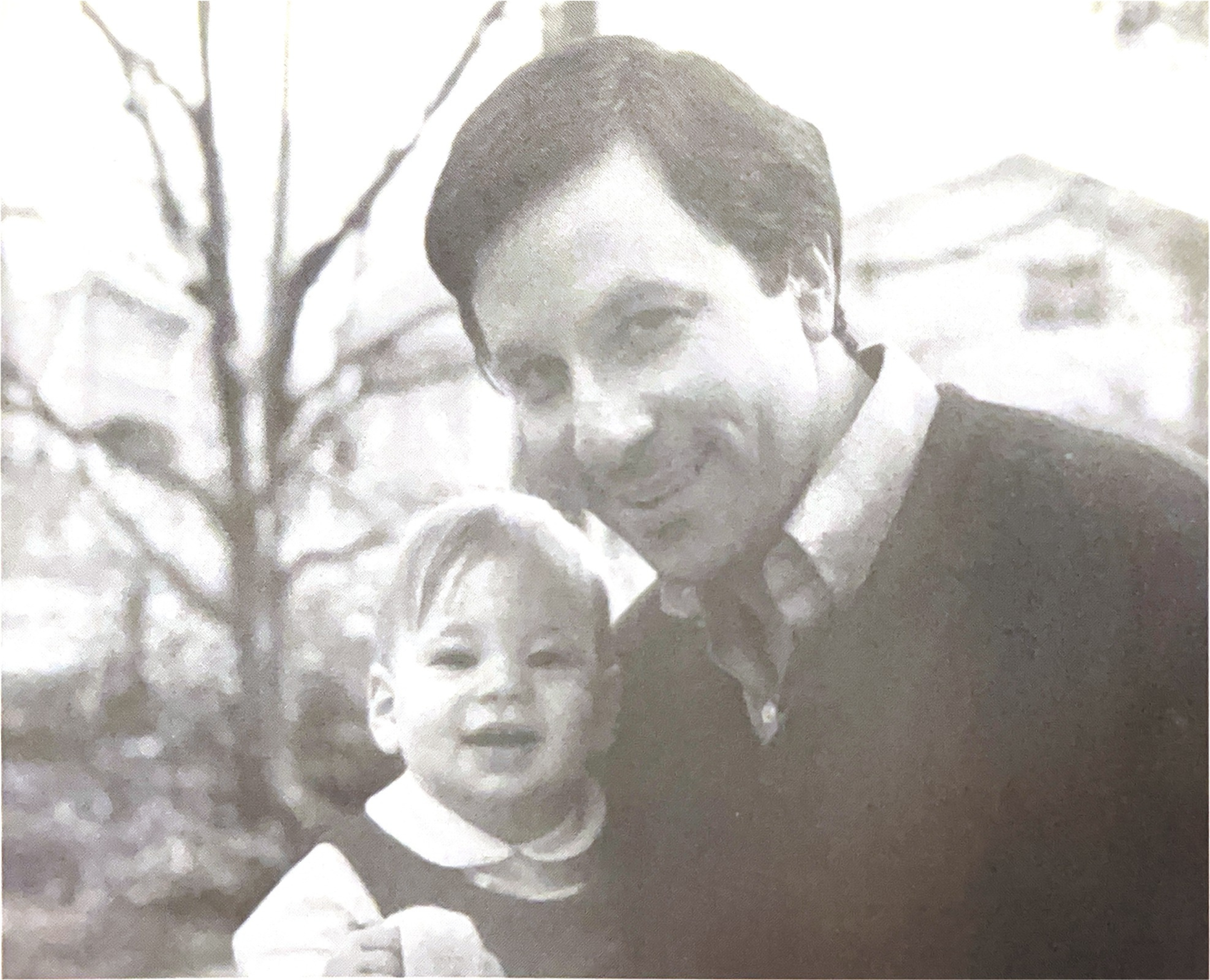
"Jeffrey Schwartz and his daughter Julie Middlehurst-Schwartz... Julie, Schwartz's first-born child, died at age 3 while suffering her final epileptic fit." Arthur Allen, Vaccine, insert.