“I remember the air of confidence and gratitude that the people exhibited toward the medical profession in this country and the government for assuming the responsibility of helping them cope with a health problem with which they were helpless in dealing… One of the things our children have a right to expect as a part of their heritage is a healthy future.”
—Arkansas' First Lady Betty Bumpers
By the 1960s, vaccination became an increasingly routine rite of passage of American childhood. The severity of diseases was fading from public memory, and complacency began seeping in. Plunging vaccination rates led to resurging outbreaks.
“We are on the verge of an epidemic of communicable diseases in Arkansas with already significant outbreaks of measles and rubella during 1973. In the face of this distressing news is the fact that at least one-half of the children in our state between the ages of six months and 11 years are not fully immunized. Even worse, according to State Health Department officials, four out of five two-year-olds have not had all of the recommended doses.”
— Arkansas First Lady Betty Bumpers' opinion piece in a 1973 St. Vincent Infirmary Journal
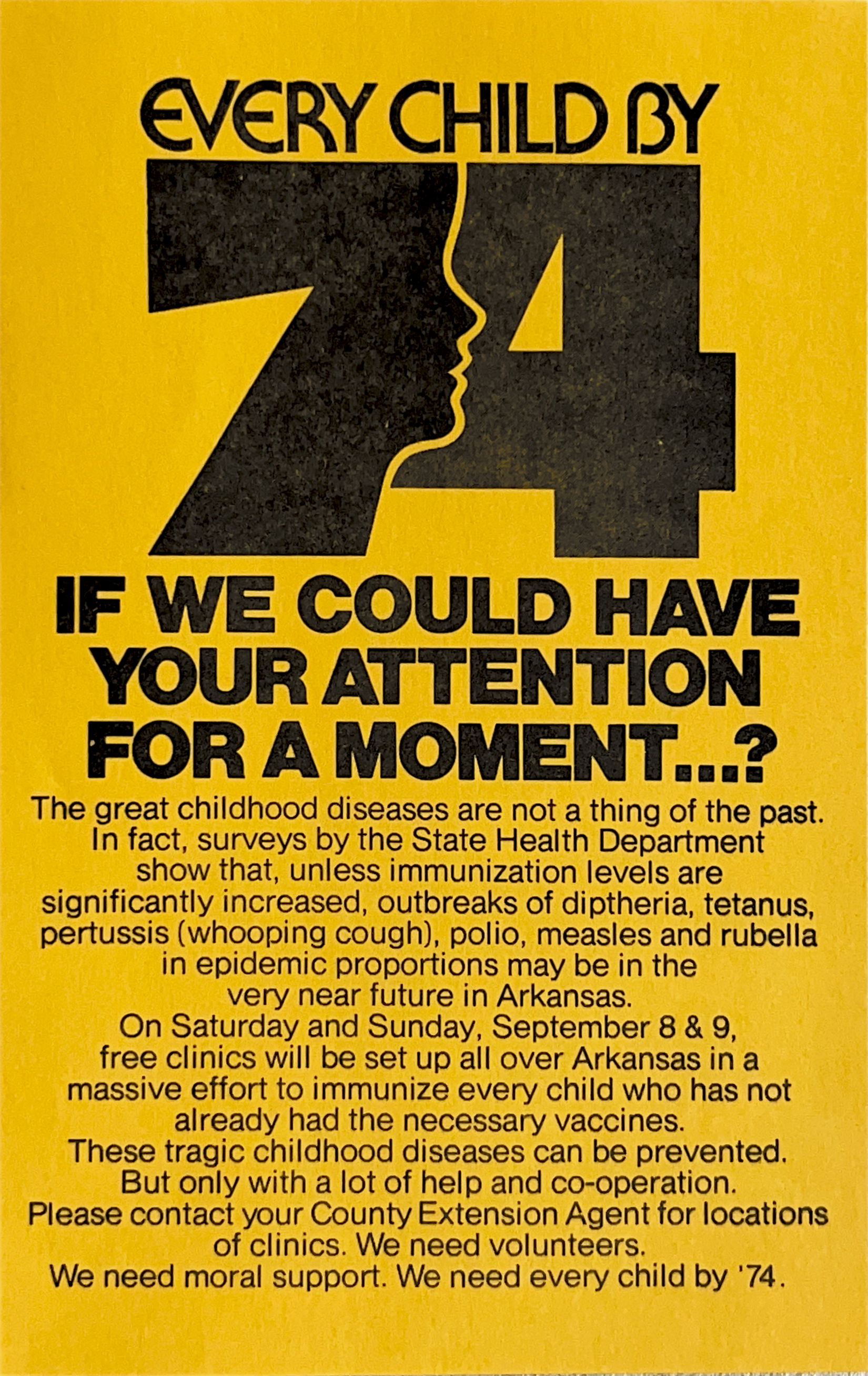
In 1973, to address Arkansas’ dismal vaccination rates, Arkansas’ First Lady Betty Bumpers launched the “Every Child by ‘74” campaign to vaccinate 225,000 children in Arkansas in one weekend. She mobilized the private and public sectors, National Guard, and media to promote vaccination, transforming Arkansas from one of the least-vaccinated states to the highest.
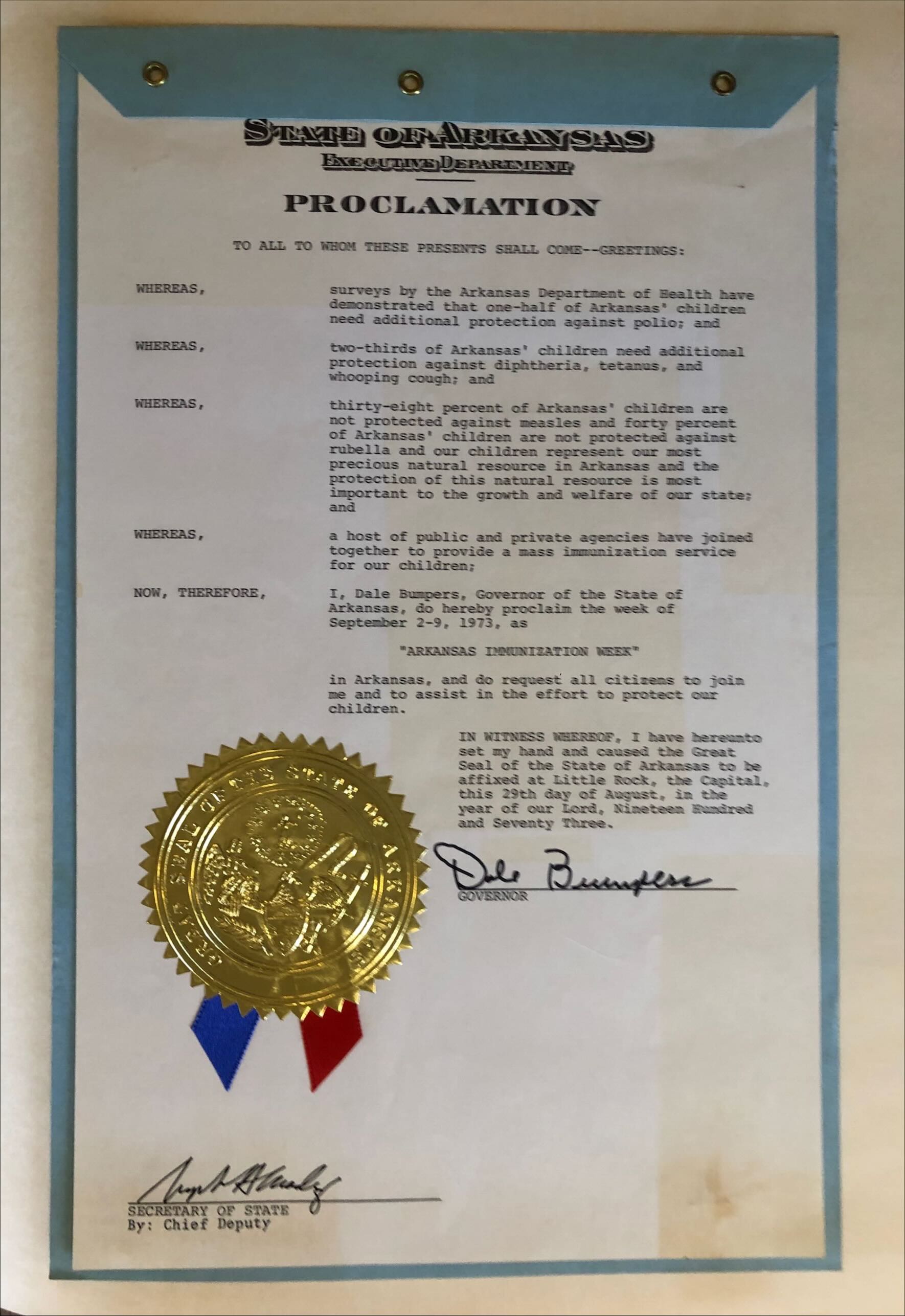
"State of Arkansas Proclamation: Arkansas Immunization Week," 20 Aug. 1973, The University of Arkansas Archives.
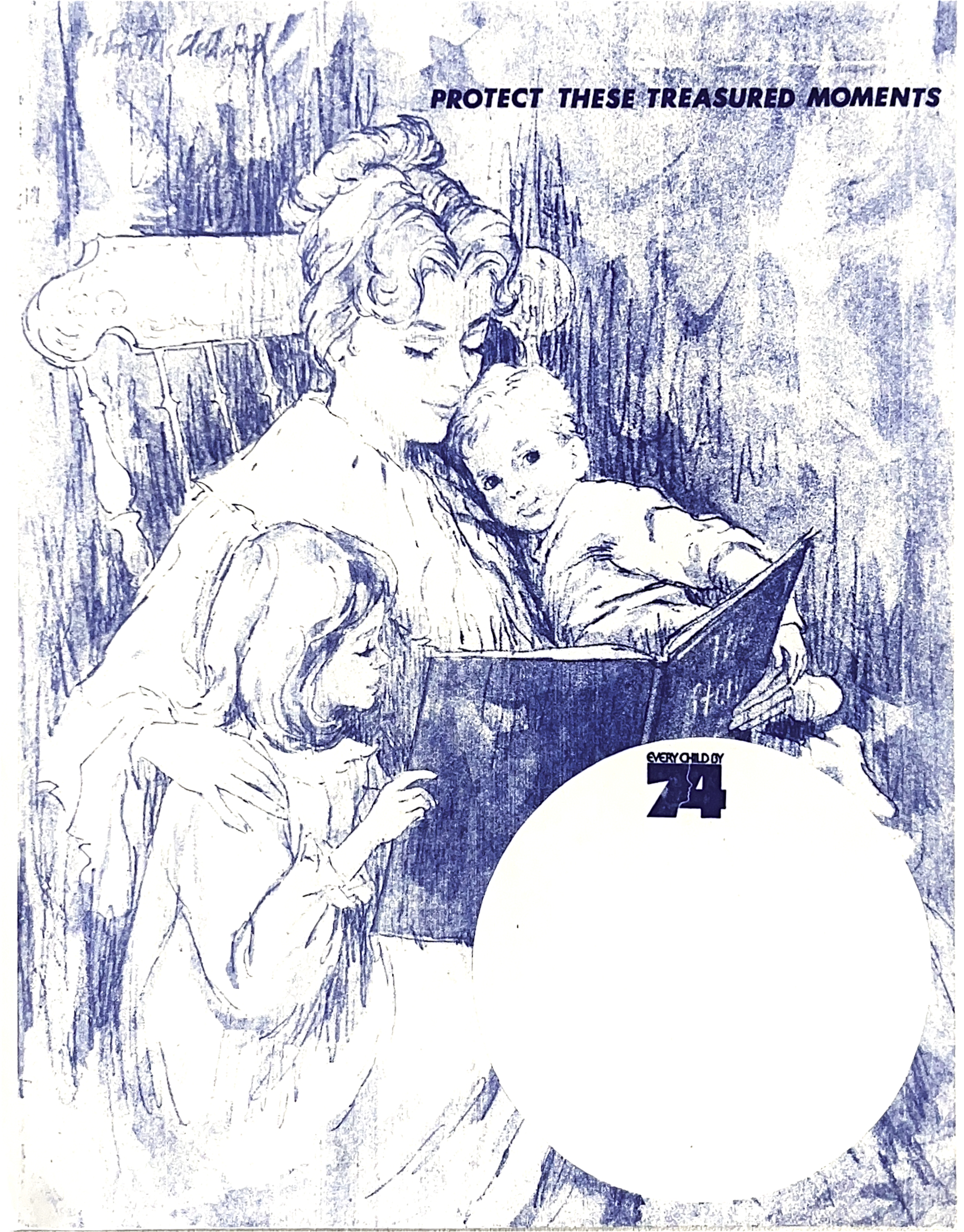
"Protect These Treasured Moments," 1974, The Butler Center for Arkansas Studies.
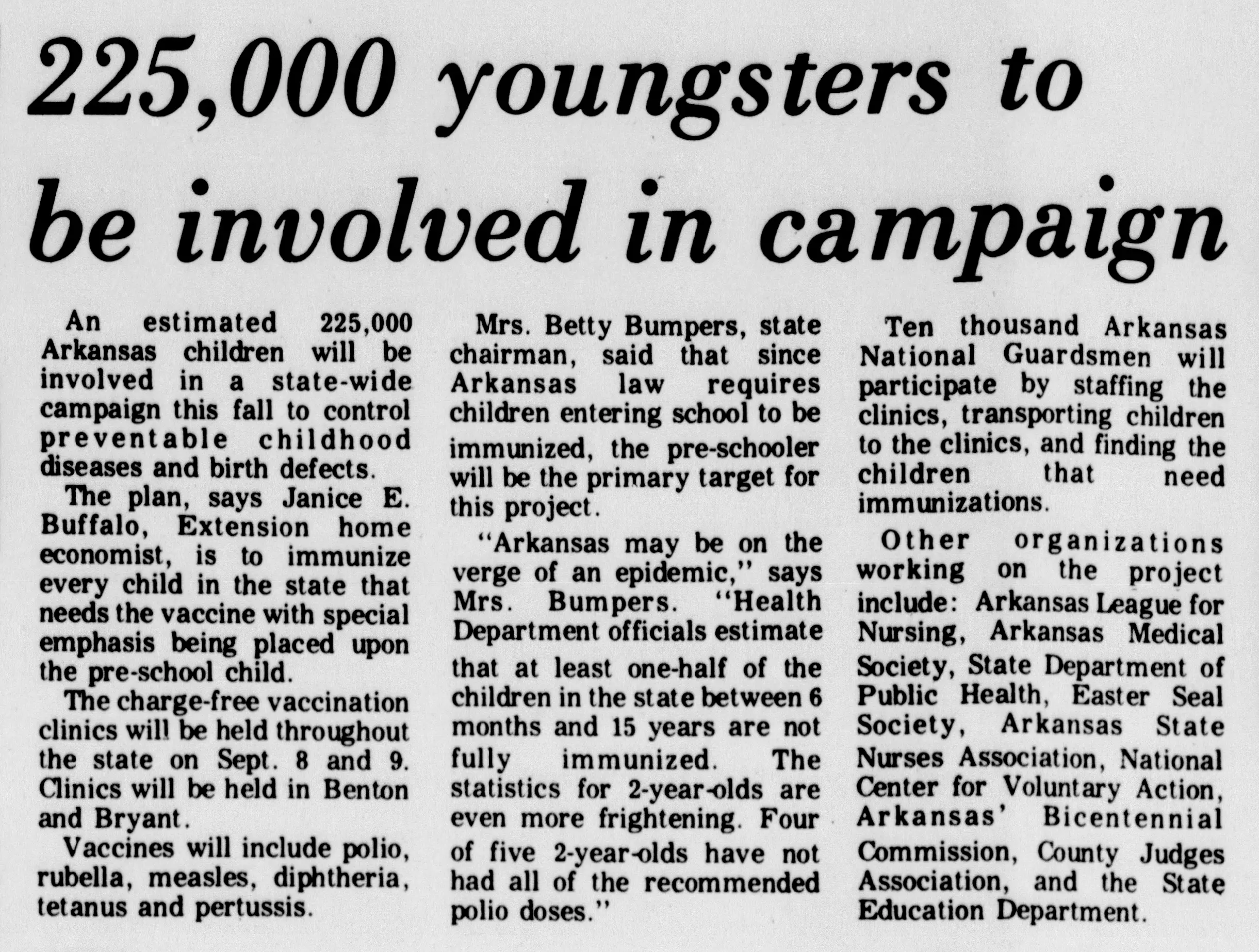
"225,000 youngsters to be involved in campaign," The Benton Courier, 30 Aug. 1973.
"Every Child By 74: Are Yours Immune?" 1974, bumper sticker, The Butler Center.
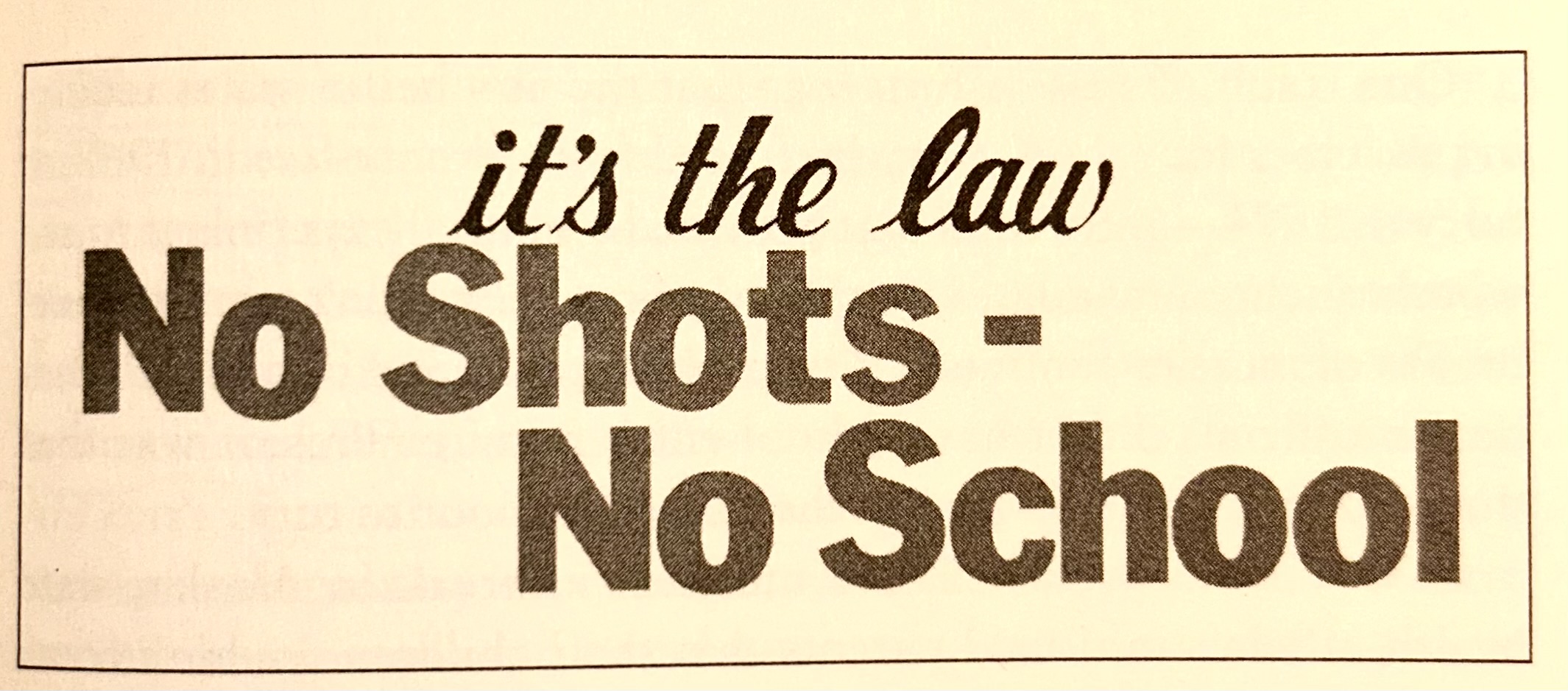
Her success brought her campaign to the national stage, where she partnered with First Lady Rosalynn Carter to launch the first comprehensive national childhood vaccine initiative. By 1977, all 50 states had a school-entry vaccine mandate, a powerful, effective, and contentious tool of public health.
Dr. Alan Hinman, "It's the Law: No Shots - No School," 1980, Deadly Choices.
"If we could have your attention for a moment," 1973-1974, flyer, The Butler Center.
Arkansas First Lady Betty Bumpers, interview, 2015, The Pryor Center for Arkansas Oral and Visual History.
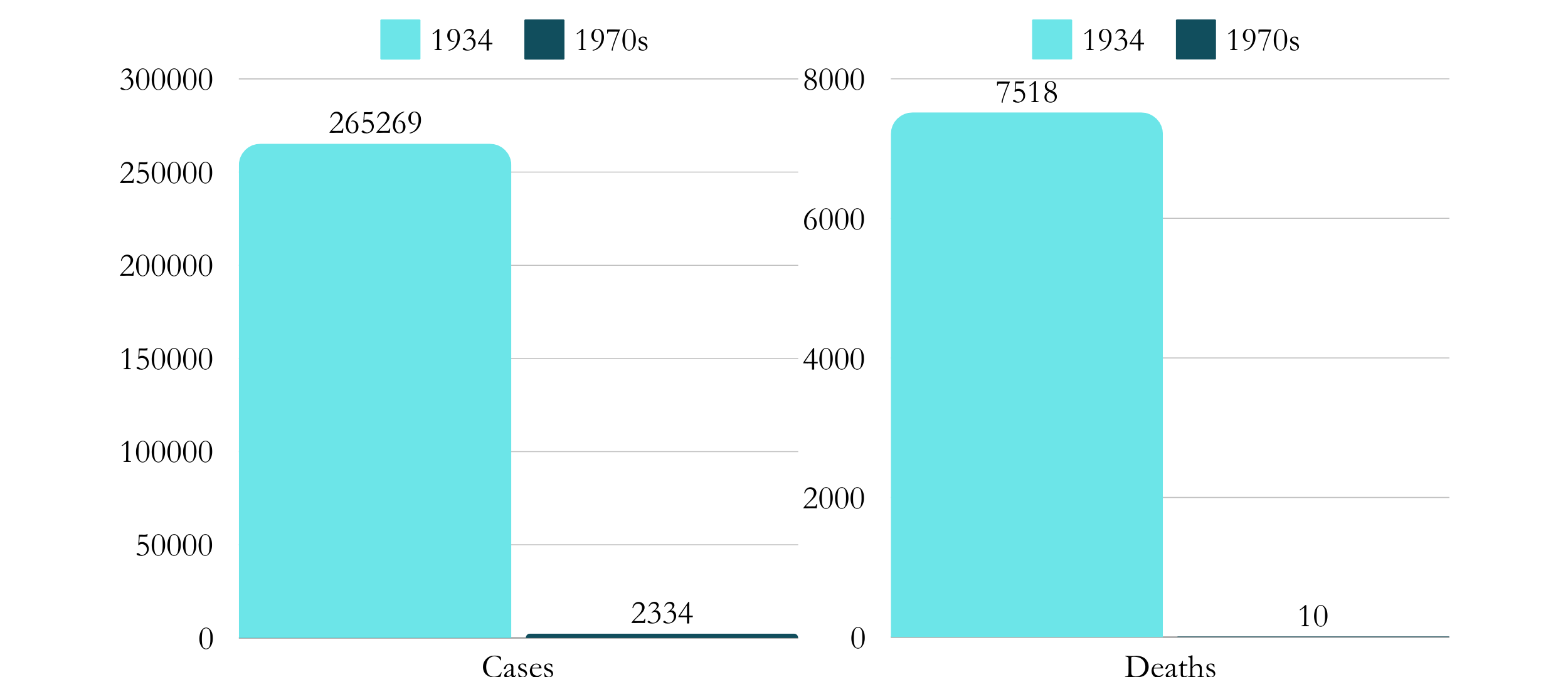
By 1980, vaccination rates in school-age children were 96%, pertussis cases had decreased by 150-fold, the world’s most dreaded disease–smallpox–was eradicated, and the second-most feared childhood disease, polio, was under control. With the public’s fear of the dreaded diseases waning and cases at an all-time low, the attention would soon shift from the dangers of pertussis to the side effects of the vaccine.
Pertussis data courtesy of the CDC. Graph created by Emma Zheng.