"[The pertussis vaccine was] a crude brew of those bacteria and all their growth products."
— Gordon Stewart, a Scottish epidemiologist
“Vaccine has become the most cost-effective and efficient tool we have in medicine…But many immunization programs are victims of their own success. They have reduced diseases to such low levels that the very rare adverse effects become more prominent.”
—Kenneth J. Bart, former Director of the School of Public Health at San Diego State University
"[The pertussis vaccine was] a crude brew of those bacteria and all their growth products."
— Gordon Stewart, a Scottish epidemiologist
The controversy over the DTP vaccine first boiled up in Britain in 1973. Two studies and a prime-time TV show, This Week, caused a major media explosion, alleging that the pertussis portion of the vaccine caused brain damage.
Gordon Stewart, a Scottish epidemiologist, turned the academic debate over vaccine safety and efficacy into a public frenzy, claiming the DPT vaccine did more harm than the disease.
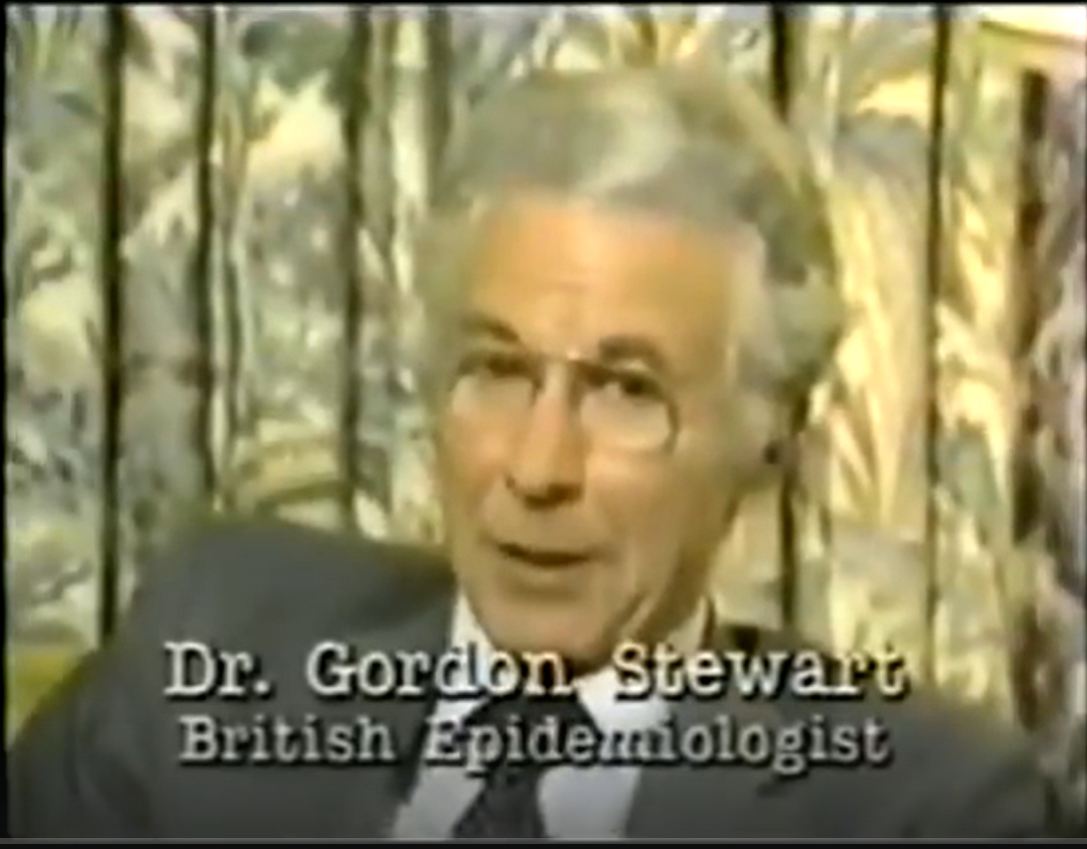
Image courtesy of WRC-TV/NBC News.
"What most unsettled [Stewart’s] colleagues was his willingness to take the same arguments to the public. Over and over Stewart endeared himself to supporters of vaccine victims by providing pithy quotes attacking the vaccine in interviews and the popular press."
— Jeffrey P. Baker, a medical historian at Duke University
Amidst shocking headlines, public outrage, and media firestorms, vaccine rates in the UK plummeted.
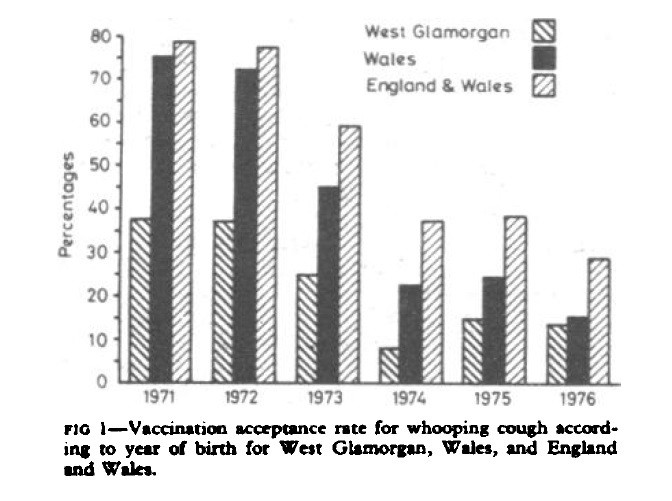
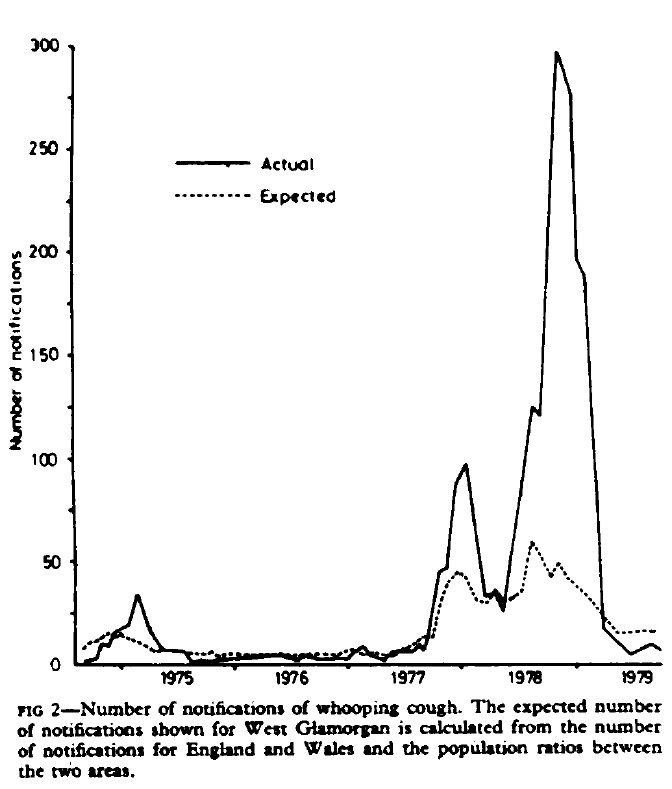
“Effect of a Low Pertussis Vaccination Uptake on a Large Community," 1981, The Swansea Research Unit of the Royal College of General Practitioners.
In 1978, England experienced a major pertussis outbreak. A score of long-term studies proved Stewart’s claims false.
Professor Stewart went to Washington.